
The Question Every Homeowner Asks First
If you're thinking about remodeling your kitchen, one of the first questions on your mind is probably: How long is this going to take? It's a fair question. The kitchen is the most-used room in most homes, and being without it for weeks — or months — can feel daunting.
The truth is, kitchen remodel timelines vary depending on the scope of work, the size of the space, material lead times, and whether any surprises pop up behind the walls. But with proper planning and an experienced contractor, the process doesn't have to be a mystery.
Here at White Oak Construction, we walk our San Diego clients through every phase before work begins so there are no surprises. Let's break down a realistic kitchen remodel timeline from planning to the final reveal.
Phase 1: Design and Planning (2–6 Weeks)
Before anyone picks up a hammer, there's a significant amount of planning that needs to happen. This phase includes:
- Initial consultation and site assessment — Your contractor visits the home, discusses your goals, and evaluates the existing space.
- Design development — Whether you're working with an in-house designer or bringing your own plans, this is when the layout, materials, finishes, and fixtures are selected.
- Permitting — Most kitchen remodels in San Diego require building permits, especially if you're moving plumbing, electrical, or walls. Permit processing through the City of San Diego's Development Services Department can take one to several weeks depending on complexity.
- Material ordering — Cabinets, countertops, appliances, and specialty tile often have lead times ranging from two to eight weeks. Ordering early is one of the best ways to keep your project on schedule.
This planning phase is where timelines are won or lost. Rushing through design decisions or waiting too long to order materials can push your entire project back by weeks. We always encourage our clients to take the time they need here — it pays off later.
Phase 2: Demolition and Rough Work (1–2 Weeks)
Once permits are approved and materials are ordered or on hand, the physical work begins. Demolition is often the fastest and most dramatic phase. Old cabinets, countertops, flooring, and sometimes walls come out to make way for the new design.
After demo, the rough work begins:
- Plumbing rough-in — Relocating water supply lines, drain lines, or gas lines for a new layout.
- Electrical rough-in — Adding circuits, moving outlets, installing recessed lighting boxes, or wiring for under-cabinet lights.
- Framing adjustments — If walls are being removed or added, structural framing happens during this stage.
This is also the phase where hidden issues sometimes appear — outdated wiring, old galvanized plumbing, or water damage behind walls. An experienced remodeling team knows how to address these problems efficiently without derailing the schedule. In many older San Diego neighborhoods like La Mesa and El Cajon, homes built in the 1950s through 1970s often have these kinds of surprises, so we always build a small buffer into the timeline.
Phase 3: Inspections and Drywall (1 Week)
Before anything gets closed up, the city inspector needs to sign off on the rough plumbing, electrical, and any structural work. Scheduling inspections promptly keeps the project moving. Once you pass inspection, drywall goes up, gets taped, mudded, and sanded smooth.
This phase feels slow to homeowners because the visual transformation hasn't happened yet. But it's critical — everything behind those walls is what makes your new kitchen safe and functional for decades to come.
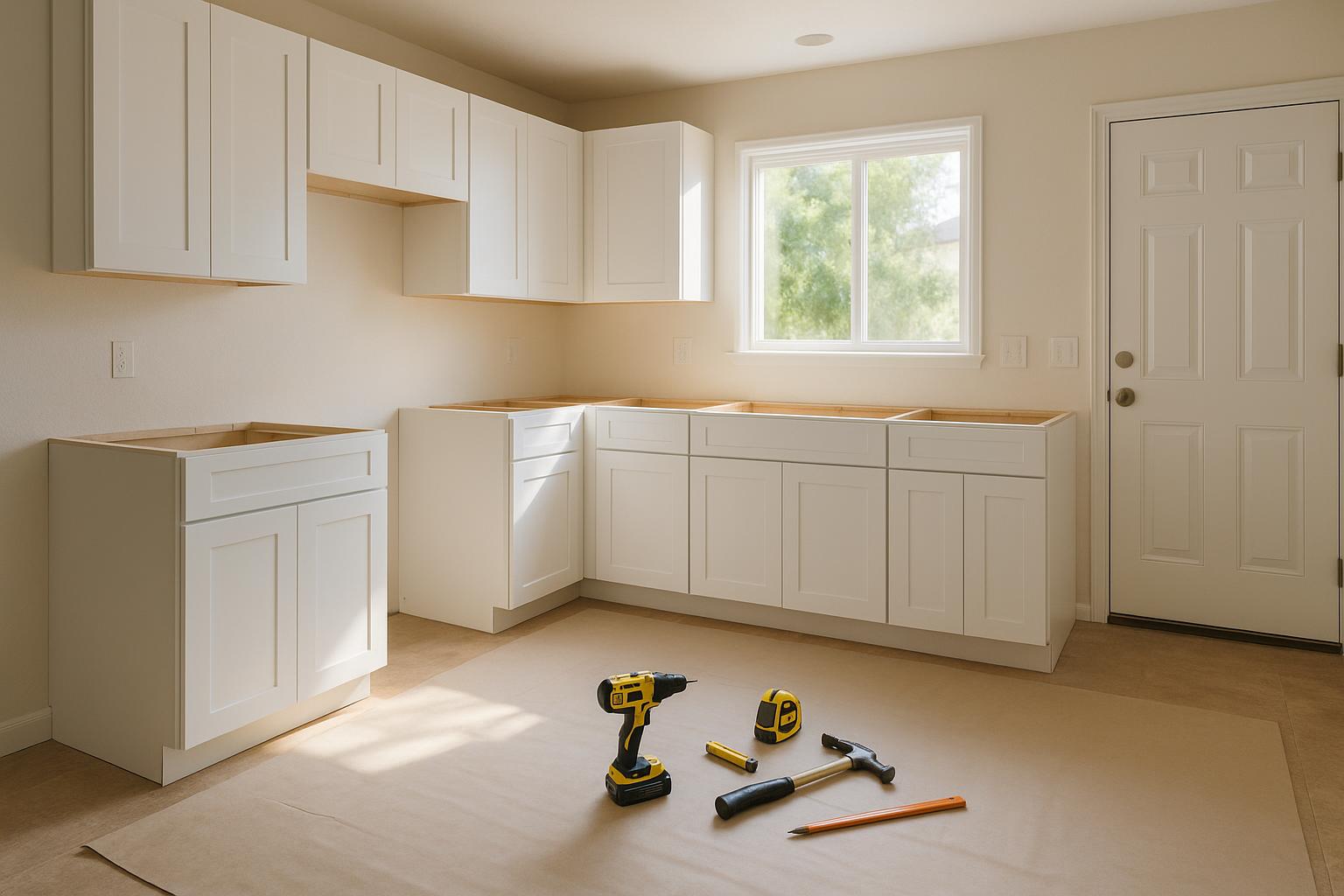
Phase 4: Cabinets, Countertops, and Finishes (2–3 Weeks)
This is where the excitement builds. The kitchen starts looking like a kitchen again.
- Cabinet installation — Custom or semi-custom cabinets are carefully leveled and secured. This typically takes two to four days depending on the kitchen size.
- Countertop templating and installation — After cabinets are in, the countertop fabricator comes to template. Fabrication usually takes five to ten business days, followed by installation.
- Backsplash tile — Tile installation and grouting typically happen after countertops are set.
- Flooring — Depending on the material and layout, flooring may be installed before or after cabinets. Your contractor will determine the best sequence for your specific project.
- Painting — Walls and trim get their final coats of paint.
During this phase, multiple trades are often working in sequence, and good project management is essential to keep everyone coordinated.
Phase 5: Final Installation and Punch List (1 Week)
The last stretch includes:
- Appliance installation and hookup
- Plumbing fixtures — Sink, faucet, garbage disposal, and dishwasher connections
- Electrical trim — Outlets, switches, light fixtures, and under-cabinet lighting
- Hardware — Cabinet pulls, knobs, and any final accessories
- Punch list walkthrough — You and your contractor walk through the finished kitchen together, noting any touch-ups, adjustments, or minor items that need attention
A thorough punch list process is the mark of a contractor who cares about getting it right. At White Oak Construction, we don't consider a project complete until our clients are genuinely happy with every detail.
So, What's the Total Timeline?
For a typical mid-range to high-end kitchen remodel in San Diego, here's a realistic summary:
- Design and planning: 2–6 weeks
- Demolition and rough work: 1–2 weeks
- Inspections and drywall: 1 week
- Cabinets, countertops, and finishes: 2–3 weeks
- Final installation and punch list: 1 week
Total construction time: approximately 5–7 weeks once work begins. Including the design and planning phase, most homeowners should expect the full process to span roughly 8–12 weeks from first meeting to cooking in their new kitchen.
Larger projects — such as those involving room additions, structural changes, or high-end custom cabinetry — can take longer. Smaller cosmetic refreshes can sometimes be completed in as little as three to four weeks.
Tips to Keep Your Kitchen Remodel on Schedule
- Make design decisions early. Indecision during construction is the number one cause of delays.
- Order materials as soon as selections are finalized. Supply chain timelines can shift, so the earlier the better.
- Choose a contractor with strong project management. A skilled tradesperson who can't manage a schedule will cost you time and money.
- Build in a buffer. Even the best-planned projects can encounter a delay. A one- to two-week cushion in your expectations reduces stress significantly.
- Communicate openly with your contractor. If something concerns you or a question comes up, bring it up right away rather than letting it linger.
Ready to Start Planning?
If you're a homeowner in San Diego, La Mesa, Chula Vista, or the surrounding communities and you've been thinking about a kitchen remodel, the best time to start planning is now. Getting ahead on design and material selections means your project can move smoothly once construction begins.
At White Oak Construction, we specialize in making the remodeling process clear, organized, and — believe it or not — enjoyable. Reach out to us for a consultation, and we'll help you understand exactly what your project will involve and how long it will take.